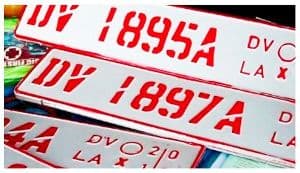
Let me establish that the unavailability of DV plates as used to be, is nothing unlawful. Regulation 23 of the Road Traffic Regulations, 2012 (L.I. 2180), provides the entire regime for issuance of DV plates. At all times, DV plates under the Regulation are to be used only on vehicles being driven to fix one defect or the other, or moving a vehicle from one point by a manufacturer to a garage or for a car dealer, from the point of offload of the vehicle to the dealer’s place of business.
The only time a second party is even expected to be in a vehicle bearing a DV plates which is not being driven for any of the purposes I referred early, is presumed that that additional party is trying the vehicle for the purposes of buying it.
That established, let’s see how this could benefit you who has bought a vehicle and still seeking to use a DV plate.
Under Section 26 of the Sale of Good Act, 1962 (Act 137), property in goods passes under a contract of sale of goods when the parties intend it to pass.
This means that the parties can by themselves, pass property immediately a vehicle is sold and the papers handed to the buyer.
Knowing what we know in this country, it cannot be argued that where a buyer of a vehicle buys the vehicle from its dealer and takes immediate steps to register same, the seller would feel obliged to help in providing all documents required for the buyer to be able to register the car. This presupposes that where a buyer delays in registering the car immediately and allow time to pass, the longer it takes to do so, the difficult it gets to get the seller to help in producing documents to help the buyer to register the car.
This means that the longer it takes to register a car which you bought and paid for, the more the seller doesn’t feel obliged to help, and even more, the more sometimes it becomes even impossible to find the seller in the case of a person who just did a one-off sale and relocates to another place.
The dangers such a person who is unable to find the seller to get the documents stand is that, he cannot register the vehicle except by a court order. That individual can only get the court to examine his or her evidence of purchase of the vehicle and upon satisfying the court, an order could be given by the court to DVLA to register the car in the name of the buyer.
Remember, DVLA has no business in this effort. When you buy a car and can’t find the seller, DVLA has no business in aiding you to register your car. DVLA is not a party to the sale and could not have provided support to ensuring you are registered. Remember section 26 of the Sale of Goods Act? It is only parties to a contract of sale of goods that can decide when property passes. DVLA is not one of those parties.
So, the benefit you stand to gain from DVLAs restrictions on the use of DV plates especially as an individual vehicle owner who has acquired a vehicle for personal use, is to register it when you still have that control over the dealer than when you would have to start begging him or her to help you with the documentations.