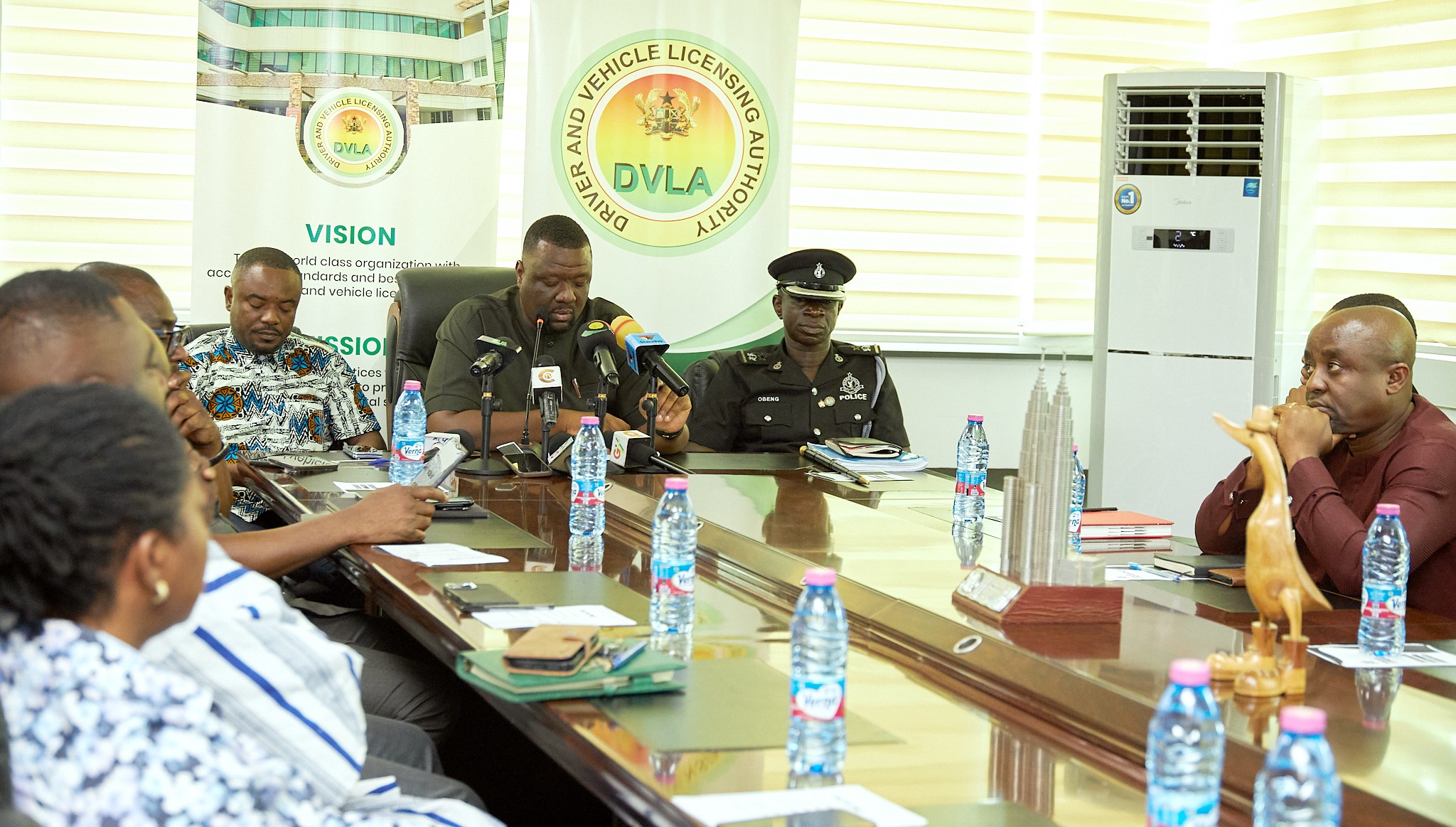

The Driver and Vehicle Licensing Authority (DVLA) has
uncovered a criminal network responsible for the illegal manufacture and
distribution of more than 30,000
counterfeit Defective Vehicle (DV) plates across the country, with an estimated value
of GH¢12.51 million.
The Chief Executive of the DVLA, Mr.
Julius Neequaye Kotey, disclosed this at a press briefing at the head office,
revealing that the illegal operation is costing the state approximately GH¢20 million annually in lost revenue. Describing the situation as a major
threat to the country’s regulatory system, Mr. Kotey stated that the activities
of the network go beyond a simple regulatory violation.
“This is not merely a regulatory breach
but a criminal enterprise that threatens national security, undermines law
enforcement and deprives the state of legitimate revenue. We will continue to
work closely with security agencies to dismantle this network and bring all
those involved to justice,” he said.
Investigations conducted by the Authority in collaboration
with the National
Security revealed
a well-organised operation with a structured distribution network. According to
the Authority, the counterfeit plates were produced at an undisclosed location
and transported at night to a distribution point in La Paz, Accra, before being distributed through
networks operating in Kumasi
and Takoradi.
So far, five
suspects have been arrested and arraigned before court and have been remanded into custody.
They are expected to reappear on March
17, 2026, while two
additional suspects remain at large and are currently being pursued by security agencies.
The Authority also revealed that the fake DV plates were
often accompanied by forged
documentation, including counterfeit motor insurance certificates and
fake Form D and Form E
logbook documents, giving the impression that vehicles were properly
registered and insured. The Authority warned that in the event of an accident,
such fraudulent documentation could leave victims without valid insurance
protection.
Preliminary investigations further suggest that the
suspects are linked to illegal
intermediaries popularly known as “goro boys,”
who operate within and
around some DVLA offices.
As part of measures to curb the illegal trade, DVLA has restricted the issuance of DV plates for
2026 in
accordance with Regulation
23 of the Road Traffic Regulations, 2012 (L.I. 2180). Under the regulation, DV plates may
only be issued to motor
traders, fleet owners and licensed trade plate dealers and may only be used for specific
purposes such as moving unregistered vehicles, testing vehicles after assembly
or repair, or delivering repaired vehicles to fleet owners. Each officially
issued DV plate costs GH¢417.25.
The Deputy
Chief Executive in charge of Services, Mr. Foster Akwasi Asante, also cautioned individuals who may
consider engaging in the illegal trade to desist, warning that security
agencies are actively pursuing offenders. Mr. Kotey further announced that the
DVLA will soon introduce Radio
Frequency Identification (RFID) embedded number plates to enable electronic verification of
vehicle registration details and detect counterfeit plates.
In addition, the Authority plans to open five new DVLA offices within the
next two weeks to
improve public access to its services nationwide. DVLA advises the public to transact business directly with authorised
staff and avoid middlemen while investigations into the illegal DV plate network
continue.

Experience seamless vehicle registration, driver’s license renewal, and real-time updates—all in one place.


Copyright © 2025 DVLA. All rights reserved.



